In the fall of 1986, a filmmaking crew for the Dutch broadcaster VRPO arrived in New York with the intent of capturing the city’s bustling hip-hop scene. Their efforts resulted in Big Fun in the Big Town, a documentary that spotlights numerous artists thriving amid major commercial and artistic breakthroughs. There’s MC Shan stalking a nightclub stage as he performed his most famous song, “The Bridge”; and Roxanne Shanté and beatboxer Biz Markie hyping a crowd for her era-defining single, “Def Fresh Crew.” There’s D.M.C. showing off his new Cadillac to Big Fun narrator Marcel Vanthilt weeks after Run-D.M.C.’s Raising Hell was released to rave reviews and heavy Billboard chart action. And there’s L.L. Cool J preening in his native Queens neighborhood as he explained why, unlike his B-boy peers, he focused on female fans with romantic ballads like “I Can Give You More.”
“It’s like the way rock ‘n roll was back in the days the way they wouldn’t accept rock ‘n’ roll to the fullest, and now they accepting it,” said Doug E. Fresh while being interviewed by Vanthilt. “We’re going through the same thing they went through.”
Big Fun in the Big Town reflects an inarguable buzz for a genre that only mere months before in 1985, as the breakdancing craze receded, had led folks in the rap industry to worry that it would soon disappear. Doug E. Fresh and the Get Fresh Crew’s gold-certified “The Show,” L.L.’s gold-certified debut Radio, Mantronix’s acclaimed self-titled debut, and the ongoing rise of Run-D.M.C. dispelled those fears. (Even though L.L.’s “Rock the Bells” wasn’t released as a single until the spring of 1986, fans made it a boombox staple as soon as Radio dropped.) Now, hip music journalists at major U.S. magazines like Rolling Stone and Musician covered rap with growing excitement. British pubs like New Musical Express and Melody Maker eagerly depicted the latest B-boy sensations on their covers. At Spin, John Leland effectively turned his monthly “Singles” column into a clearinghouse for rapper’s delights, whether praising Eric B. & Rakim’s “Eric B. Is President” (erroneously, he identified DJ Eric B. as the vocalist instead of Rakim) or calling Whistle’s “Nothing Serious (Just Buggin’)” “as slickly put together as your favorite Mr. Mister song.”
However, these critics, nearly all of whom were white, often misunderstood rap’s nuances. (Racially, Billboard R&B columnist Nelson George and dance columnist Brian Chin were notable exceptions.) Complaints about misogynistic lyrics, prompted by a slew of cuts like DJ Jazzy Jeff & the Fresh Prince’s “Girls Ain’t Nothing but Trouble” that mimicked Slick Rick’s “La-Di-Da-Di,” Bad Boys’ “Veronica” and other story raps about loose women, were admirable but self-righteous, akin to school monitors wagging fingers at kids for making smutty jokes at the lunch table. Plus, the girls seemed capable of lyrically defending themselves, with Anquette’s “Throw the P” (an answer to 2 Live Crew’s “Throw the D”) and Glamour Girls’ “Oh! Veronica” as proof.
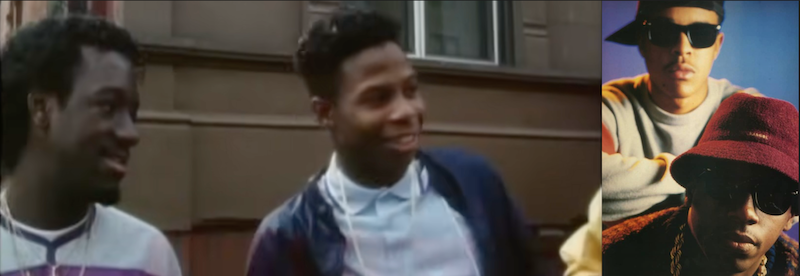
Then there was Schoolly-D, the Philadelphia musician whose “P.S.K. What Does It Mean?” became an underground sensation in the winter of 1986. He elicited numerous complaints with his outrageous tales of smoking cheeba, touting guns and knocking out rivals, but his ingenious use of oscillating noise and stark 808 beats proved too intoxicating to ignore. Billboard’s Chin called it “one of the truly ugly records to have come out this year.” Despite admitting that it was “incredibly cool,” Spin’s Leland worried over Schoolly-D’s rhapsody about Philly homeboys causing mayhem: “This is a bad record.” Village Voice’s Robert Christgau called him “an ignorant thug.”
None of them credited Schoolly-D for pioneering a memorable persona that became the definitive “gangsta” icon in rap (while noting old-school pioneer and self-described “gangster duck” Rammellzee as a predecessor). As a self-contained hyphenate, he distributed “P.S.K.” and his first two albums Schoolly-D and Saturday Night! The Album – one of the first hip-hop artists to create an independent record label for their own work. He even drew illustrations for his album covers. Meanwhile, his music spoke to a coarsening in Black cultural discourse precipitated by a swelling crack epidemic while evoking the kind of wild and sometimes-violent energy that typified mid-Eighties street life. After all, a “gettin’ ill” ethos is how Los Angeles rapper Ice-T could happily poplock during a video cameo for Joeski Love’s novelty hit “Pee-Wee Dance,” only to follow Schoolly-D’s lead by recording the first West Coast reality-rap classic, “6 in the Mornin’.”
Much like accomplished thespians, Schoolly-D, Ice-T and Just-Ice (the latter whose breakout moment on Back to the Old School was marred by a real-life murder charge) created characters based on lived and witnessed situations as well as a healthy dose of “cold gettin’ dumb.” Which percentage of their personas were informed by reality…and fantasy? Journalists struggled to interpret their talents without ingrained prejudice, whether consciously or not.
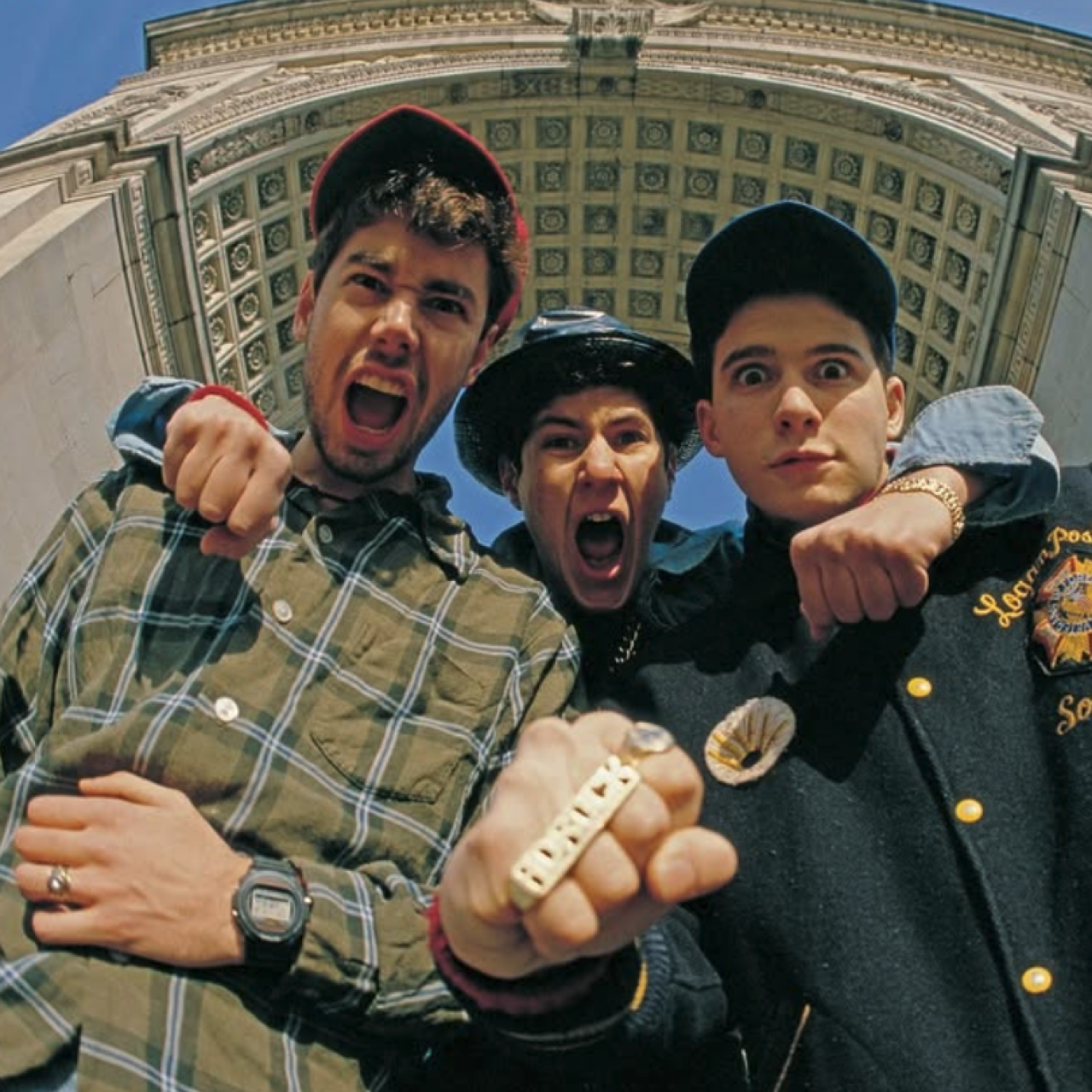
As hip-hop evolved, older critics steeped in P-funk, garage rock, post-punk and post-disco failed to appreciate its urban sensibility…at least until Beastie Boys released Licensed to Ill. With considerable resources from Def Jam, Brooklyn rappers Mike D, King Ad-Rock and MCA developed a ferocious blend of crate-digging breaks, AOR hard rock, and beery outer-borough raunch alongside producer Rick Rubin. On “The New Style,” they casually referenced carrying pistols to parties. During “Paul Revere,” they lyrically shot up a bar like a John Ford western as Ad-Rock boasted of penetrating a woman “with a wiffle ball bat.” Rock critics immediately got the joke and showered Licensed to Ill with praise, celebrating the four white musicians’ outré comic sensibility in a way that they simply couldn’t manage for the likes of Schoolly-D. Black rap fans embraced the Beasties, too, despite the group’s occasional penchant for dropping the N-word in media appearances.
Admirably, the Beasties frequently credited Schoolly D’s musical influence on License to Ill. “I was disappointed with Schoolly D,” Mike D later told Nick Smash in the 1990 book Hip Hop 86-89 when remembering finally meeting him. “I wanted him to be really dusted and sort of not on the same plane as us y’know? … But naw, he’s a really nice guy.”
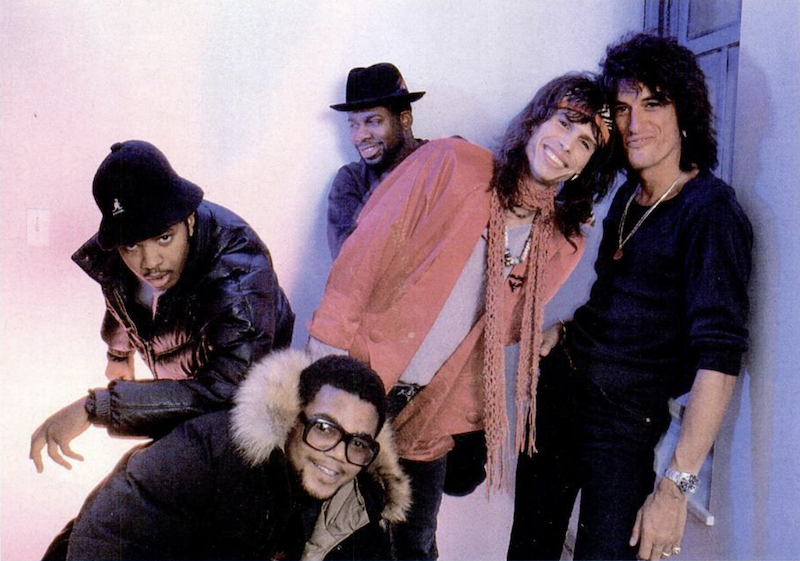
The question of how a media ecosystem centered on white privilege would engage with radical Black youth culture cast a shadow over the year’s biggest heroes. With Raising Hell, Hollis, Queens trio Run-D.M.C. finally broke into the mainstream, satisfying the B-boy faithful with “My Adidas” and “Peter Piper” while soaring to number 4 on Billboard’s Hot 100 with “Walk This Way,” a pop-rock collaboration with Aerosmith that dominated MTV. But the group’s success was soon overshadowed by news stories about fights breaking out during tour stops and nervous promoters canceling shows. The bad press peaked after a concert at Long Beach Arena where Crips and Bloods fought one another, at least 30 people were injured, and Run-D.M.C. didn’t even take the stage before the night ended. “To much of white America, rap means mayhem and bloodletting,” wrote Ed Kiersch in a Run-D.M.C. cover story for Rolling Stone about the national outcry that followed the Long Beach disaster.
Run-D.M.C., for their part, countered that they grew up in two-parent homes and enrolled in college before 1983’s “It’s Like That” / “Sucker MC’s” convinced them to focus on music. They made positive and uplifting yet undeniably hardcore hip-hop, threading the needle between gleeful knucklehead jams like “Dumb Girl,” important declarations of self-esteem like “Proud to Be Black” and corny crossover smashes like “Walk This Way.” They eagerly participated in charity endeavors.
“I’ve got a movement of happiness. We are not thugs,” said Run in the RS story. However, he could also “see the crack on the corner.” He was a product of a complex environment that a mainstream media apparatus too obsessed with sorting Black people into The Cosby Show-approved buppies and irredeemable ghetto victims didn’t bother to understand.
When asked in the April 1986 issue of Spin why rap songs sound all the same, L.L. Cool J countered, “Does [Run-D.M.C.’s ‘King of Rock’] sound like [Fat Boys’] ‘Don’t You Dog Me’? Whodini is R&B, almost mainstream. Fat Boys is almost bubblegum. Run-D.M.C. is hardcore B-boys. You can’t compare.” Yes, hip-hop may have blown up in 1986 as millions of suburban brats awakened to its fresh innovations. However, learning to comprehend the subtext underneath the bluster would take much longer.
The 75 Best Rap Singles of 1986
- Anquette, “Throw the P” (Luke Skyywalker Records)
- B. Fats, “Woppit” (Posse Records)
- Beastie Boys, “Hold It Now, Hit It” (Def Jam Recordings)
- Beastie Boys, “It’s the New Style” / “Paul Revere” (Def Jam Recordings)
- Beastie Boys, “(You Gotta) Fight for Your Right (To Party!)” (Def Jam Recordings)
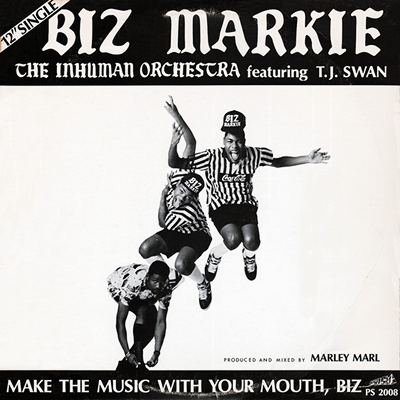
- Biz Markie the Inhuman Orchestra feat. T.J. Swan, “Make the Music with Your Mouth, Biz” (Prism)
- Boogie Down Productions, “South Bronx” / “The ‘P’ Is Free” (B Boy Records)
- Cut Master D.C., “She’s Good to Go” / “Rockin the House” / “We Came to Rock” (Zakia Records)
- Cut Master D.C., “Brooklyn Rocks the Best” (Zakia Records)
- DBL Crew, “Bust It” (Urban Rock Records)
- DJ “K.J.” & M.C. Kooley “C”, “Let’s Get This Party Started” (Beware Records)
- D.J. Polo & Kool G. Rap, “It’s a Demo” / “I’m Fly” (Cold Chillin’)
- Doug E. Fresh and the Get Fresh Crew, “All the Way to Heaven” / “Nuthin” (Reality Records)
- Doug E. Fresh and the Get Fresh Crew, “Lovin’ Ev’ry Minute of It” (Reality Records)
- E-Vette Money, “E-Vette’s Revenge” (Slice Records)
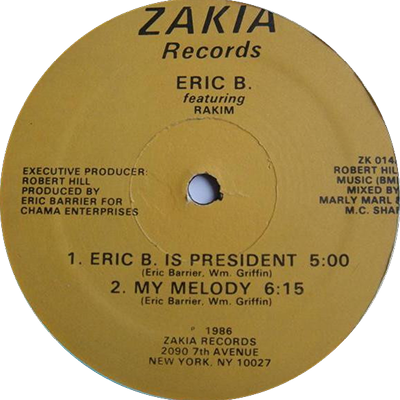
- Eric B. feat. Rakim, “Eric B. Is President” / “My Melody” (Zakia Records)
- Freddy B & The Mighty Mic Masters, “Freddy’s Back” / “The Main Event…Word” (Tuff City)
- Frick and Frack, “You Shouldn’t Have Done It” (Romil Records)
- Funkmaster Wizard Wiz, “Crack It Up” / “Can You Take a Hint (Bellevue Patient)” (Tuff City)
- General Kane, “Crack Killed Applejack” (Gordy)
- Grandmaster Flash, “Style (Peter Gunn Theme)” (Elektra)
- Heavy D. & The Boyz, “Mr. Big Stuff” (MCA Records)
- Ice-T, “Dog’n the Wax (Ya Don’t Quit–Part II)” / “6 in the Mornin’” (Techno Hop Records)
- Jazz Jeff & Fresh Prince, “Girls Ain’t Nothing but Trouble” (Word Records)
- J.D. Krush, “Krush Style” (Sound Makers Records)
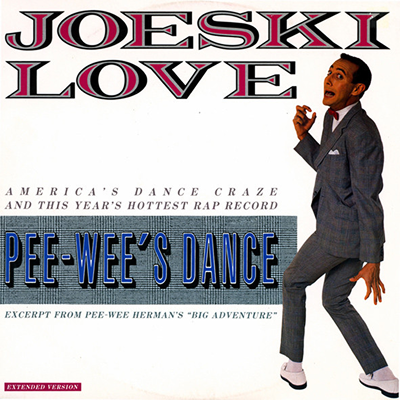
- Joeski Love, “Pee Wee’s Dance” (Vintertainment)
- Just-Ice, “Put That Record On” / “Latoya” / “That Girl Is a Slut” (Fresh Records)
- Kool Moe Dee, “Go See the Doctor” / “Monster Crack” (Rooftop Records)
- Kurtis Blow, “I’m Chillin’” (Mercury)
- L.L. Cool J, “Rock the Bells” / “El Shabazz” (Def Jam Recordings)
- Mantronix, “Bassline” (Sleeping Bag Records)
- The Masters of Ceremony feat. Don Barron, “Sexy” (Strong City Records)
- M.C. A.D.E., “Bass Mechanic” (4-Sight Records)
- M.C. Boob A.K.A. Steady “B”, “Bring the Beat Back” (Pop Art Records)
- M.C. Miker “G” & Deejay Sven, “Holiday Rap” (JDC Records)
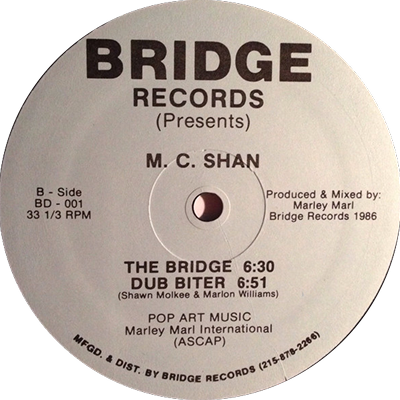
- M.C. Shan, “Beat Biter” / “The Bridge” (Bridge Records)
- M.C. Shan, “Jane, Stop This Crazy Thing” / “Cocaine” (Cold Chillin’)
- M.C. Shy-D, “I’ve Gotta Be Tough” / “We Don’t Play” (Luke Skyywalker Records)
- Mixmaster Gee and the Turntable Orchestra, “The Manipulator” (MCA Records)
- Original Concept, “Can You Feel It?” / “Knowledge Me” (Def Jam Recordings)
- Original Concept, “Bite’n My Stylee” / “Pump That Bass/Live (Get A Little Stupid… Ho!)” (Def Jam Recordings)
- The Real Roxanne with Hitman Howie Tee, “Bang Zoom (Let’s Go-Go)” (Select Records)
- Roxanne Shanté, “Def Fresh Crew” (Pop Art Records)
- Royal Ron / Pimp Pretty / D.J. MA, “Rock the B-Boy Stance” (Schoolly-D Records)
- Run-D.M.C., “My Adidas” / “Peter Piper” (Profile)
- Run-D.M.C., “Walk This Way” (Profile)
- Run-D.M.C., “You Be Illin’” (Profile)
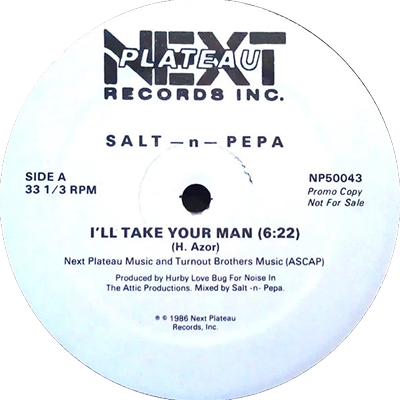
- Salt -N- Pepa, “I’ll Take Your Man” (Next Plateau Records Inc.)
- Schoolly-D, “Saturday Night” / “Do It Do It!” (Schoolly-D Records)
- Seville feat. Jazzy Jay, “Envious” (N.V.)
- The Showboys, “Drag Rap” (Profile)
- Skinny Boys, “Jockbox (America Loves the Skinny Boys)” / “Feed Us the Beat” (Warlock)
- Spoonie Gee, “That’s My Style” / “Take It Off” (Tuff City)
- Steady “B” / Steady “B” feat. Shanté, “Just Call Us Def” / “Fly Shanté” (Pop Art Records)
- Stetsasonic, “Just Say Stet” (Tommy Boy) (1985/1986?)
- Sugar Ray Dinke, “Cabrini Green Rap” (I Am Records)
- Super Kids, “The Tragedy (Don’t Do It)” (NIA)
- Supreme Force, “You Gotta Come Out Fresh” (NIA)
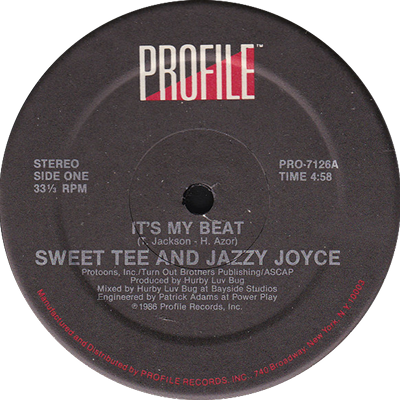
- Sweet Tee and Jazzy Joyce, “It’s My Beat” (Profile)
- T La Rock, “Breaking Bells” / “Bass Machine” (Fresh Records)
- T La Rock, “Back to Burn (Annihilate)” (Fresh Records)
- Tackhead, “Mind at the End of the Tether” / “Is There a Way Out” (On-U Sound)
- T.C. Islam, “Can You Play It” / “Funky Fresh New England” / “Play It Loud” / “Sucker M.C.” (Tri State Records)
- Tricky Tee, “Leave It to the Drums (Here Come the Drums)” (Sleeping Bag Records)
- Tuff Crew, “Philly Style” (So Def Records)
- The Two, “The Real Grandmaster” (Profile)
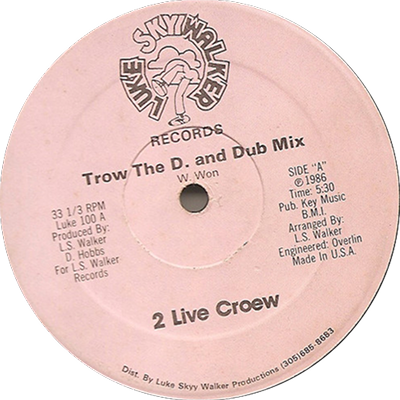
- 2 Live Croew, “Trow the D” / “Ghetto Bass” (Luke Skyywalker Records)
- Ultimate Force, “Cuts Like These” (Hip-Hop Records)
- Ultimate III, “Ultimate III Live!” (N.V.)
- Ultra Magnetic M.C.’s, “Ego Tripping” / “Funky Potion” (Next Plateau Records Inc.)
- The Uptown Crew, “Uptown Is Kickin’ It” (MCA Records)
- Whistle, “(Nothing Serious) Just Buggin’” (Select Records) (1985/1986?)
- Whodini, “Funky Beat” (Jive)
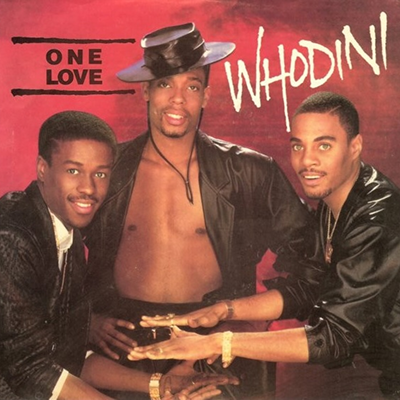
- Whodini, “One Love” (Jive)
- Word of Mouth feat. DJ Cheese, “Coast to Coast” (Profile)
Beastie Boys featured photo – MCA, Mike D and King Ad-Rock – by Glen E. Friedman.
Vinyl artwork taken from Discogs.
Humthrush.com will always be free to read and enjoy. If you like my work, leave a tip at Ko-fi.com/humthrush.