In the July 12, 1986, issue of Billboard, Nelson George used his weekly column to criticize the music industry for failing to address the growing crack epidemic in the Black community. “The battle against crack is being fought every day in the streets, and the black stars of this industry need to get in the trenches,” he wrote while crediting “Stop the Madness,” a 12-inch single and video assembled by MCA Records that featured Whitney Houston, Ralph Tresvant of New Edition, Herb Alpert and others. “Don’t let it be said that the black music community played while its brothers and sisters cracked up.”
George undoubtedly spoke to the major record labels and R&B acts that dominated Black pop at the time. But he failed to note how the fledgling rap underground teemed with warnings about the drug’s pernicious effects ever since Grandmaster Melle Mel’s 1983 single “White Lines (Don’t Do It)” and its rhymes about the highs and lows of crack’s predecessor, freebase cocaine: “Now I’m broke and it’s no joke, it’s hard as hell to fight it, don’t buy it!”
Much like hip-hop itself in the late Seventies, freebase or “smokable” rock cocaine emerged from afterhours parlors where discerning nightlife regulars could indulge themselves. It metastasized, first on the coasts, then everywhere via “crack houses” and open-air markets. “Out of the clubs and in homes, crack spread rapidly. Use expanded from L.A. up the West Coast as more people became aware of its high quality and low cost, and as competition pushed dealers into untapped markets,” wrote Donovan X. Mercy in When Crack Was King, a 2023 cultural history of the era. Similarly, the earliest mentions of crack emerged in West Coast 12-inches like The Organization’s “The Big Beat” (where future star WC talked about “the rock man”) and West Coast Crew’s “Put the Pipe Down” as well as Toddy Tee’s legendary Batteram mixtape, which featured a parody of Whodini’s “Freaks Come Out at Night” called “The Clucks Come Out at Night.”
By 1986, media alarm about the drug and its ruinous effects led Congress to pass the Anti-Drug Abuse Act of 1986, which legislated a five-year mandatory prison sentence for possessing five grams of crack cocaine, a stark (and possibly racialized) contrast to legal guidelines that required the same sentence length for five hundred grams of powder cocaine. Meanwhile, rappers flooded the nascent hip-hop genre with crack-inspired music, from adding stray references to devoting themselves to the topic.
Crack rap percolated on underground 12-inches like the Super Kids’ “Tragedy (Don’t Do It)” and MC Shan’s “Jane, Stop This Crazy Thing.” On the flip side of Doug E. Fresh & The Get Fresh Crew’s hit 12-inch “All the Way to Heaven,” there was “Nuthin’,” which castigated the drug dealers fueling the epidemic. Kool Moe Dee, the former Treacherous Three MC who soared to solo stardom with the raunchy novelty rap “Go See the Doctor,” put “Monster Crack” on that 12-inch’s B-side. Meanwhile, Just-Ice’s acclaimed Back to the Old School included “Little Bad Johnny,” where the rapper described a “bad boy” who goes astray by “smoking big blunts and even base crack.” Schoolly D’s Saturday Night! The Album ended with the haunted echo chamber of “It’s Crack.” Even two of the biggest rap albums of the year, Run-D.M.C.’s Raising Hell and Beastie Boys’ Licensed to Ill, tacitly acknowledged the crisis. On the former, Run-D.M.C. dissed a “Dumb Girl” who’s “always sniffin’” and proclaimed that they left “dope” alone on “It’s Tricky.” Perhaps less admirably, the Beasties talked about partying “on that [angel] dust” on “Slow Ride.”
Most of these cuts were deadly serious about the carnage unfolding. But there were exceptions like “The P Is Free,” the B-side to Boogie Down Productions’ classic 12-inch, “South Bronx.” It boasted a sing-song melody and relative lack of concern for the woman KRS-One disses: “The pussy is free, ‘cause the crack costs money, oh yeah!” he chanted. (The group’s unheralded debut 12-inch, “Say No Brother (Crack Attack Don’t Do It),” stuck closer to a conventional moral plea.) As time passed, more rappers adopted KRS-One’s amused perspective, either as drug dealers determined to reap financial rewards at all costs or as bystanders humiliating pathetic baseheads. “It was once said by a man who couldn’t quit / Dope man, please can I have another hit?” rapped Ice Cube on N.W.A’s 1987 debut 12-inch, “Dope Man.” “The dope man said, cluck, I don’t give a shit / If your girl kneel down and suck my dick.”
As a topical theme, crack rap persisted as late as the early Aughts, when 60 Second Assassin harmonized on Ghostface Killah’s 2000 song “Stay True” about no longer being able to profit from the crisis: “The streets is rough out here / The crack game came and had its years / What is a man to do?” But the tide arguably crested during several months in 1986 and 1987 before slowly receding in the years since.
Key Crack Rap Tracks
- Boogie Down Productions, “Say No Brother (Crack Attack Don’t Do It),” “The P Is Free”
- D-Rock-D, “My Fresh Nissan”
- Doug E. Fresh & The Get Fresh Crew, “Nuthin’”
- Duke Bootee, “Broadway”
- Freddy B & The Mighty Mic Masters, “Freddy’s Back”
- Frick and Frack, “You Shouldn’t Have Done It”
- Funkmaster Wizard Wiz, “Crack It Up”
- General Kane, “Crack Killed Applejack”
- Grandmaster Caz, “Count Basey”
- Just-Ice, “Little Bad Johnny”
- Kool Moe Dee, “Monster Crack”
- The Maniacs, “Bum MCs,” “Crack, Crack, Don’t Do It”
- Masters of Ceremony, “Cracked Out”
- MC Shan, “Jane, Stop This Crazy Thing,” “Cocaine”
- Roxanne Shanté, “Def Fresh Crew”
- Schoolly D, “It’s Crack”
- Super Kids, “Tragedy (Don’t Do It)”
- Toddy Tee, “Just Say No”
- True Life, “Cocaine Crack”
- Vansilk, “Basepipe”
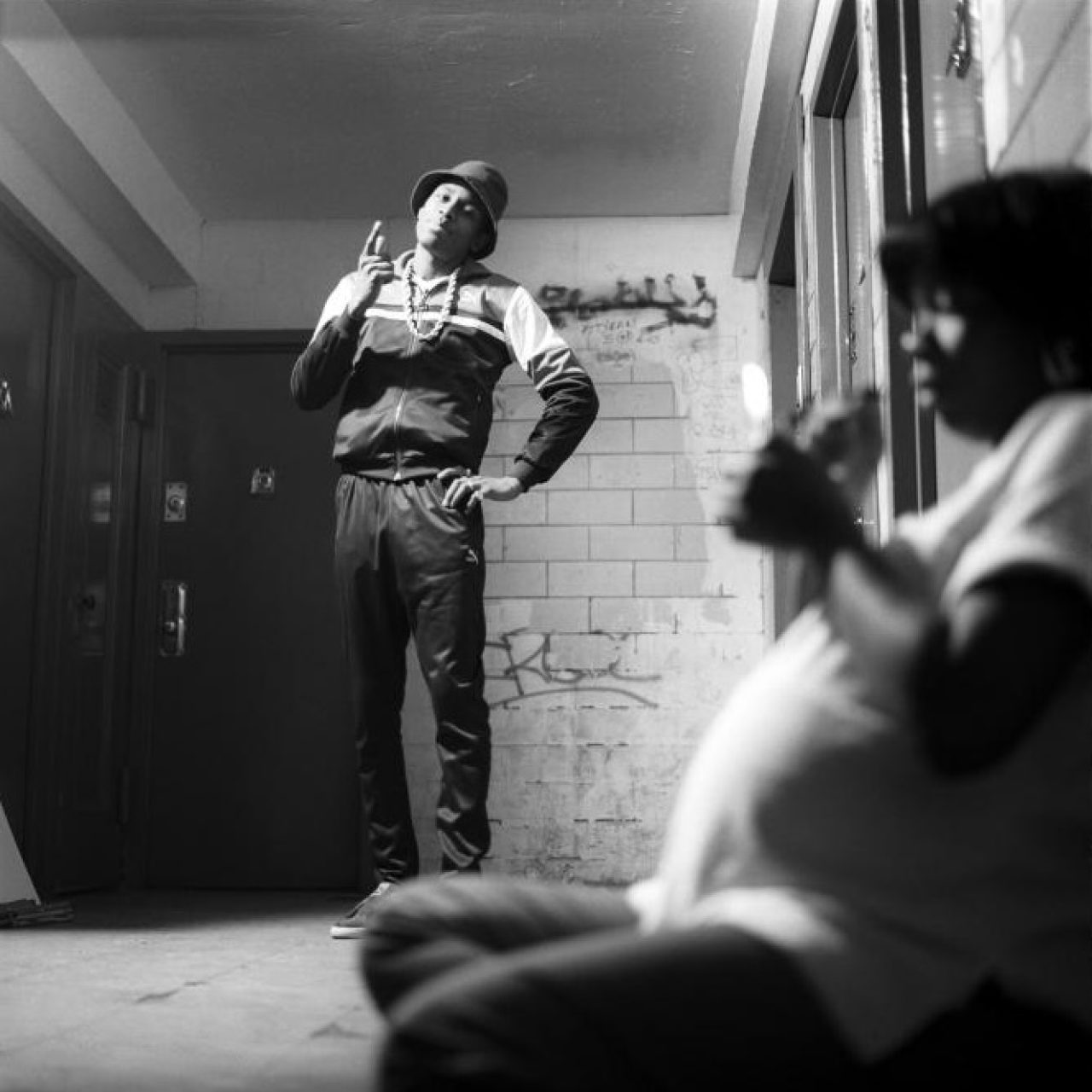
Featured photo of MC Shan by George DuBose.
Humthrush.com will always be free to read and enjoy. If you like my work, leave a tip at Ko-fi.com/humthrush.